Pickleball Doubles Rules vs Singles Rules
Share this on
Most people learn pickleball through doubles, since it’s the more common format at recreational courts and social meetups. But singles pickleball exists too, and it plays by a slightly different set of rules — different serving sequences, different court usage, and a noticeably different pace. If you’ve only ever played doubles and someone invites you to a singles match, a few things will feel unfamiliar fast.
This guide breaks down exactly where the two formats overlap and where they diverge, so you’re not caught off guard switching between them.
Pickleball Doubles Rules vs Singles Rules: The Core Differences
At a high level, both formats share the same court, the same net height, the same kitchen rule, and the same double-bounce rule. What changes is how serving works, how scoring is tracked, and how much ground each player needs to cover.
Doubles is played with two players per side, while singles is played one-on-one. That single difference cascades into nearly every other rule variation between the two formats.
Serving Differences
This is where the two formats separate the most.
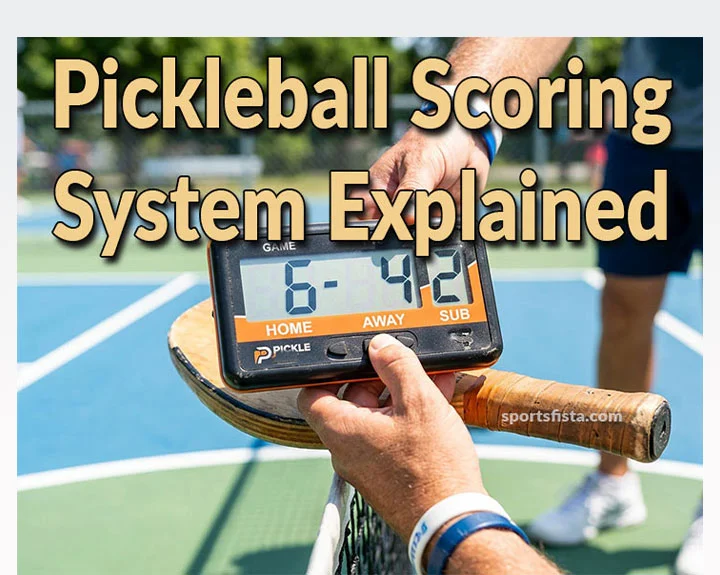
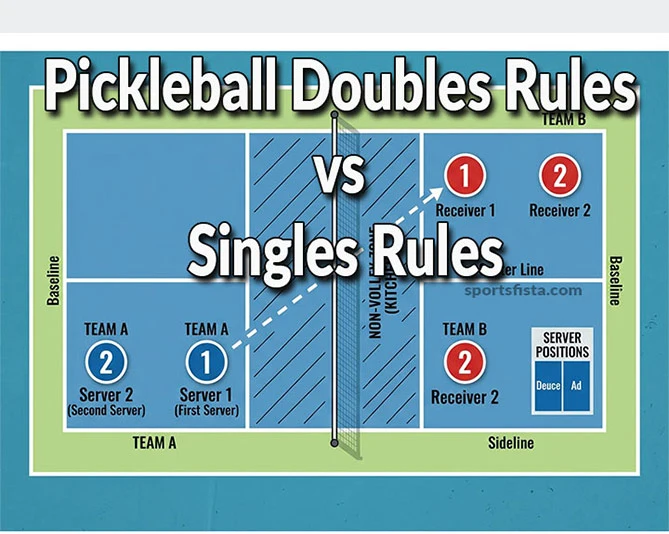
In doubles, each team gets two server turns before a side out (except at the very start of the game, where only one player serves before the first side out). The score is called using three numbers — your team’s score, the opponent’s score, and which server is currently up (1 or 2).
In singles, there’s no second server to rotate through — each side out passes the serve directly to the other player. The score is called with just two numbers: your score and your opponent’s score. There’s also a simple rule tying serve position to score: if your score is even, you serve from the right (even) side; if it’s odd, you serve from the left. This detail doesn’t exist in doubles the same way, since team positioning is more fluid.
Court Positioning and Movement
In doubles, each player typically covers about half the court, splitting responsibilities between forehand and backhand sides, or between net play and baseline defense depending on strategy. This division of labor is part of why doubles tends to involve more net-based dinking rallies — with two players covering the court, there’s more coverage to defend against aggressive net play.
In singles, one player is responsible for the entire width of the court, which changes strategy significantly. Players tend to rely more on deep, well-placed shots to move their opponent side to side, since there’s far more open space to exploit compared to doubles.
Strategy Differences Between the Two Formats
Because of the positioning differences, the way points are actually won looks quite different between formats.
Doubles strategy tends to revolve around controlling the kitchen line as a team, using soft dinking rallies to draw errors, and communicating constantly about who takes which ball. Teamwork and court coverage matter as much as individual shot-making.
Singles strategy leans more on movement, endurance, and shot placement, since one player has to cover the entire court alone. Deep serves and returns, along with well-placed groundstrokes to open areas of the court, tend to be more valuable than aggressive net rushes, since a single player leaving the baseline creates a lot of open space behind them.
Physical Demands: Singles vs Doubles
Singles pickleball is noticeably more physically demanding than doubles, simply because there’s no partner to share court coverage with. A singles match involves significantly more running, lateral movement, and sustained rallying compared to the shorter, more net-focused exchanges common in doubles.
This is part of why doubles remains the more popular recreational format — it’s more social, less physically taxing, and easier for players of mixed skill and fitness levels to enjoy together. Singles tends to appeal more to competitive players looking for a tougher physical and mental challenge.
Rules That Stay the Same in Both Formats
Despite the differences, quite a bit carries over unchanged between doubles and singles:
- The double-bounce rule still applies — the serve and return must each bounce before volleying begins.
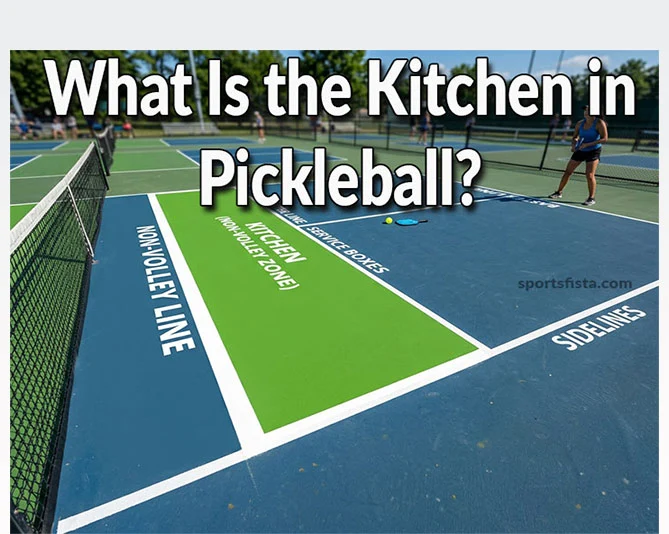
- The kitchen (non-volley zone) rules are identical in both formats.
- Games are still typically played to 11 points, win by 2.
- Faults are called the same way, whether it’s a doubles or singles match.
- Court dimensions and net height don’t change between formats.
This overlap is actually helpful for beginners, since most of what you learn playing doubles transfers directly if you ever try singles.
Common Mistakes When Switching Between Formats
A few habits tend to trip players up when they move from one format to the other:
- Forgetting the two-number scoring system in singles after getting used to doubles’ three-number call
- Not adjusting serve position based on odd/even score in singles
- Standing in a doubles-style split position during singles, leaving too much court open
- Underestimating how much more running singles requires
- Expecting a partner to cover the other half of the court during a singles match out of habit
Final Thoughts
Doubles and singles pickleball share the same fundamental rules around the kitchen, the double-bounce, and basic scoring structure, but the serving sequence, court coverage, and overall strategy shift quite a bit between the two. If you’ve only played doubles, trying singles is a good way to sharpen your footwork and shot placement, since there’s nowhere to hide on an empty half of the court. Understanding both formats also just makes you a more well-rounded player overall.
Frequently Asked Questions
What is the difference between pickleball singles and doubles scoring?
Doubles scoring uses three numbers (team score, opponent score, and server number), while singles scoring uses just two numbers since there’s no second server to track.
Is pickleball singles harder than doubles?
Yes, singles is generally more physically demanding since one player has to cover the entire court alone, leading to more running and longer rallies.
Do the kitchen rules change between doubles and singles pickleball?
No, the kitchen (non-volley zone) rules are identical in both formats, regardless of how many players are on each side.
How does serving work differently in pickleball singles?
In singles, the serve alternates directly between the two players with each side out, and the serving side (right or left) depends on whether the server’s score is even or odd.
Which is more popular, pickleball singles or doubles?
Doubles is by far the more popular recreational format, largely because it’s more social, less physically taxing, and easier for players of different skill levels to play together.