What Is the Kitchen in Pickleball?
Share this on
If you’ve spent any time around a pickleball court, you’ve probably heard someone yell “you’re in the kitchen!” and wondered why a sport played outdoors is suddenly talking about appliances. It’s not a cooking reference — it’s one of the most important rules in the entire game, and honestly, it’s what makes pickleball feel like pickleball instead of just a smaller version of tennis.
If you’re new to the sport, understanding the kitchen early will save you a lot of confused rallies and a few arguments with your doubles partner. Here’s everything you need to know.
The Kitchen, Defined
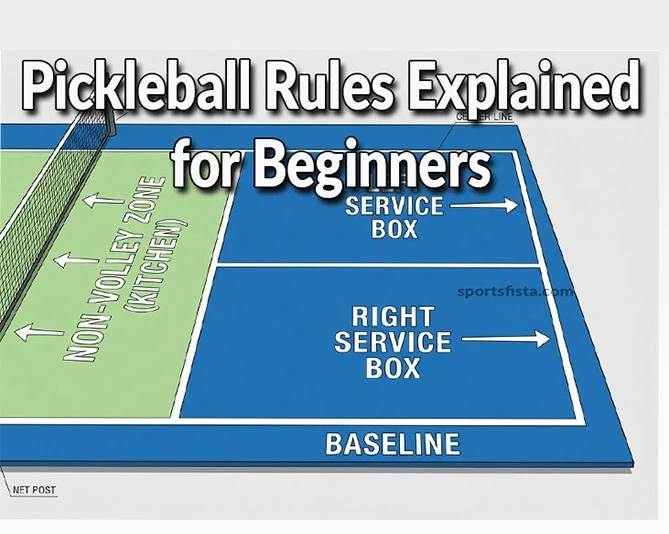
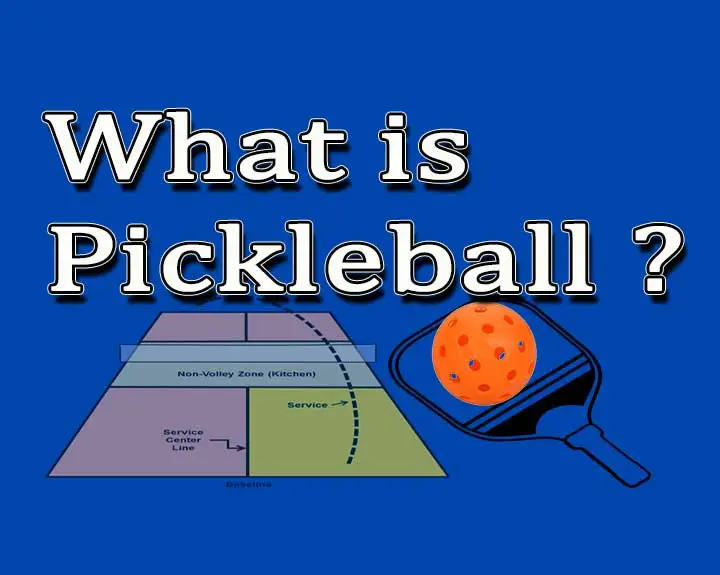
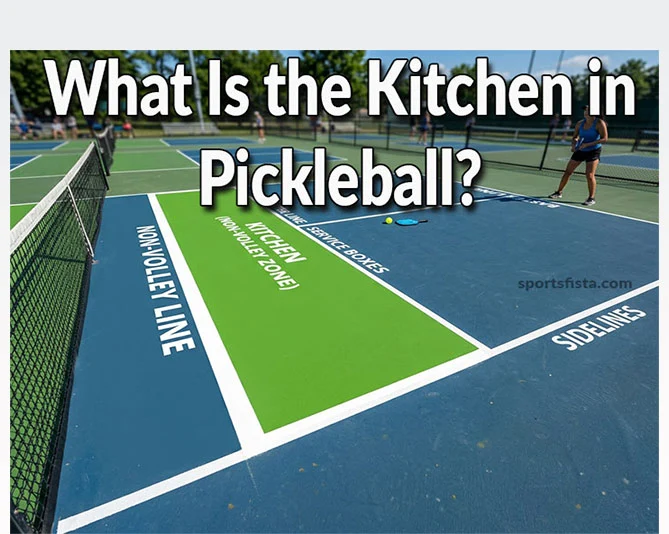
The “kitchen” is the nickname for the non-volley zone — a seven-foot section on each side of the net, running the full width of the court. So in total, there’s a 14-foot no-volley strip splitting the middle of the court, seven feet on each side of the net.
Officially, it’s called the non-volley zone (NVZ) in the rulebook, but almost nobody calls it that on the court. “Kitchen” stuck, and now it’s just part of the sport’s vocabulary.
The Core Rule: No Volleying Inside It
Here’s the actual rule in plain terms: you cannot hit the ball out of the air (a volley) while any part of your body is touching the kitchen or the line that marks its edge.
You can absolutely stand in the kitchen. You can absolutely hit a ball while standing in the kitchen — as long as the ball has already bounced first. What you cannot do is smash a ball out of the air while you’re inside that zone or touching its boundary line.
This trips people up because it feels like it should be about where the ball lands, but it’s actually about where your feet are when you make contact.
Why the Kitchen Exists
Without this rule, pickleball would look completely different. Taller players or those with a big overhead smash could simply camp right at the net and slam every ball straight down, making the game almost impossible for anyone else to compete in.
The kitchen forces a bit of distance between players and the net during fast exchanges, which keeps rallies alive longer and rewards accuracy and soft-game skills — like the drop shot — over pure power. It’s a big part of why pickleball feels more strategic and less like a power contest than it might look at first glance.
Common Kitchen Faults
A few specific situations count as a fault related to the kitchen:
- Volleying the ball while standing inside the kitchen
- Stepping on the kitchen line while volleying, even if the rest of your body is outside it
- Your momentum carrying you into the kitchen right after a volley, even if you were outside it at contact
- Anything you’re wearing or holding — including your paddle — touching the kitchen during a volley
That last one catches a lot of players off guard. If your paddle so much as brushes the kitchen line while you’re volleying, it’s a fault, even if your feet never moved.
Can You Ever Stand in the Kitchen?
Yes — this is one of the biggest misconceptions for beginners. Standing in the kitchen isn’t against the rules at all. Players move in and out of it constantly during a match, especially to hit a ball that’s already bounced there.
The rule only applies at the moment of contact with the ball during a volley. So if the ball bounces first, you can step in, hit it, and step back out with no issue whatsoever.
How the Kitchen Changes Strategy
Once you understand the kitchen, you start to see how much it shapes actual gameplay. Skilled players use something called the “dink” — a soft, controlled shot that arcs just over the net and lands in the opponent’s kitchen, forcing them to either let it bounce or back away from the net to volley it safely.
Long dinking rallies right at the kitchen line are extremely common in competitive pickleball, and they’re often what separates casual players from more advanced ones. Instead of smashing the ball, the goal becomes patience — waiting for your opponent to make a mistake or leave the ball high enough to attack.
Common Beginner Mistakes With the Kitchen
A few habits show up constantly with new players learning this rule:
- Volleying a ball while standing right on the kitchen line without realizing it
- Stepping into the kitchen after a volley because of forward momentum
- Forgetting that a paddle touching the line counts the same as a foot touching it
- Assuming they can’t ever stand in the kitchen at all
- Not recognizing when an opponent has committed a kitchen fault
Like most pickleball rules, this one feels awkward for the first few games and then becomes second nature once you’ve played it out a handful of times.
Final Thoughts
The kitchen is easily one of the most misunderstood rules for beginners, but it’s also one of the most important ones to actually understand, since it shapes almost every rally past the serve. Once you get comfortable with the idea that it’s about foot position at contact, not just where you’re standing, the rest of the game starts to make a lot more sense. Watch a few rallies, pay attention to where players’ feet are during volleys, and it’ll click quickly.
Frequently Asked Questions
What happens if you step in the kitchen in pickleball?
Simply standing in the kitchen is legal; a fault only occurs if you volley the ball (hit it before it bounces) while touching the kitchen or its line.
How far is the kitchen line from the net in pickleball?
The kitchen extends seven feet from the net on each side, creating a 14-foot non-volley zone total across the middle of the court.
Can your paddle go in the kitchen in pickleball?
Your paddle can touch the kitchen as long as you’re not volleying at that moment; touching it during a volley counts as a fault, even if your feet are outside the zone.
Why is it called the kitchen in pickleball?
The nickname likely borrows from shuffleboard, where a similar restricted zone near the scoring area is also called the kitchen, though the exact origin isn’t officially documented.
Can you hit a ball in the kitchen if it bounces?
Yes, you can enter the kitchen and hit a ball that has already bounced there; the restriction only applies to volleying the ball out of the air.