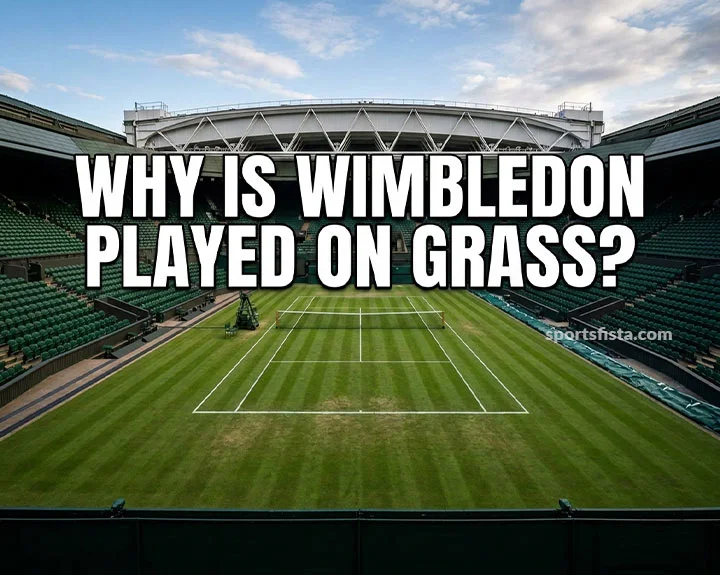
Why Is Wimbledon Played on Grass?
Share this on
Every summer, tennis fans watch players slide, dive, and skid across a bright green lawn at the All England Club, and every summer, a new wave of casual viewers asks the same question: why grass? It’s expensive, hard to maintain, and every other major tournament moved away from it decades ago. So why does Wimbledon still insist on it?
The answer isn’t really about performance or fairness. It’s about history, tradition, and a club that was built around lawn games long before tennis as we know it even existed. Here’s the full story behind grass at Wimbledon, and why it’s stuck around while the rest of the tour moved on.
Wimbledon Was Built on Grass Before Tennis Even Existed
To understand why Wimbledon plays on grass, you have to go back further than the tournament itself. The All England Club was originally founded in 1868 as a croquet club, not a tennis club. Grass lawns were simply what the club already had and maintained.
When lawn tennis started gaining popularity in the 1870s, the club added tennis courts alongside its croquet lawns, and the first Wimbledon Championships were held in 1877 on that same grass. By the time tennis became the club’s main focus, grass wasn’t a deliberate choice for the sport — it was just the surface that was already there.
In other words, Wimbledon didn’t choose grass because it’s the best surface for tennis. Grass was the foundation the entire club, and eventually the tournament, was built on.
The Other Grand Slams Moved Away From Grass
It’s worth noting that grass wasn’t always the outlier it is today. In the early-to-mid 20th century, more tournaments used grass, including parts of the US Open and the Australian Open. Over time, though, both of those tournaments transitioned to hard courts, largely because grass is difficult and expensive to maintain, wears down quickly, and doesn’t hold up well to heavy year-round use.
The French Open, meanwhile, has always been played on clay, suited to the slower, high-bouncing style that clay courts produce.
That left Wimbledon as the only Grand Slam still holding onto its original grass surface, largely because of its identity as the oldest and most tradition-bound tournament in tennis. Changing it would mean changing something fans consider central to what Wimbledon actually is.
Grass Is Extremely Expensive and Labor-Intensive to Maintain
One of the biggest reasons other tournaments abandoned grass is the sheer amount of upkeep it requires. Wimbledon’s courts are grown from 100% perennial ryegrass, chosen specifically for its durability and ability to recover from heavy foot traffic during the two-week tournament.
Maintaining that grass is a year-round job. The grounds team mows the courts to an exact height, waters them on a strict schedule, and constantly monitors soil conditions to keep the surface consistent. Even with all that care, the grass still wears down significantly by the second week of the tournament, especially near the baseline and service boxes where players spend the most time.
Because of this intensive maintenance requirement, grass courts simply aren’t practical for tournaments that run week after week throughout a long season. Wimbledon can justify the cost and effort because it’s a single, prestigious event — not a surface used across dozens of tournaments year-round.
Grass Changes the Way the Game Is Played
Beyond tradition, grass genuinely changes how tennis is played, and that’s part of why the surface has such a devoted following among purists.
The ball moves faster and stays lower on grass because there’s very little friction between the ball and the smooth blades of turf. That leads to shorter points, more emphasis on serving, and a game that rewards aggression and quick reflexes over long rallies. It’s a sharp contrast to the slow, grinding style that clay produces, and many longtime fans see grass-court tennis as a return to a more classic, serve-and-volley era of the sport.
This unique playing style is part of why Wimbledon still feels different from the other three majors, even to casual viewers. The rallies look and feel faster, and matches often hinge on just a handful of key points rather than extended back-and-forth exchanges.
Grass Season Is Short — And That’s Intentional
Because grass courts wear down so quickly and require so much recovery time, the professional grass-court season is famously short, usually running just a few weeks each year, right before Wimbledon begins. Tournaments like the Queen’s Club Championships and the Halle Open exist largely to give players a chance to adjust to the surface before the year’s only grass-court major.
This short window is part of why grass-court specialists are relatively rare compared to clay or hard-court specialists. Players simply don’t get much time each year to build comfort and consistency on the surface, which adds another layer of unpredictability to Wimbledon compared to the other Grand Slams.
Tradition Runs Deeper Than Just the Surface
Wimbledon’s commitment to grass fits into a broader pattern of tradition that defines the tournament. It’s the only Grand Slam that still enforces an all-white dress code for players, still refers to some events using terms like “The Championships” rather than a sponsor-driven name, and maintains customs like royal attendance and strawberries and cream as part of the overall experience.
Grass is simply one piece of a much larger identity. Removing it would mean stripping away something that fans, players, and the club itself see as core to what makes Wimbledon feel different from every other stop on the tour.
Could Wimbledon Ever Change Surfaces?
It’s extremely unlikely, and there’s been little to no serious push from within the sport to make that happen. Grass-court tennis, despite its cost and maintenance demands, is considered a defining part of Wimbledon’s brand and history. The All England Club has made modernizations over the years, like adding a retractable roof to Centre Court and expanding the grounds, but the surface itself has remained untouched since the tournament began.
If anything, Wimbledon’s grass courts have become more of a selling point than a limitation. In a sport where three of the four majors are now played on hard courts, Wimbledon’s grass gives it a built-in identity that fans instantly recognize, and that’s unlikely to change anytime soon.
Final Thoughts
Wimbledon plays on grass not because it’s the most practical or fair surface for competitive tennis, but because grass is where the tournament, and the club itself, began. What started as a natural byproduct of the All England Club’s croquet-lawn origins has turned into one of the most recognizable traditions in all of sports. While the rest of tennis has largely moved on to more manageable surfaces, Wimbledon’s grass courts remain a direct link to the sport’s earliest days, and that history is exactly why the tournament has no plans of ever changing it.
Frequently Asked Questions
Why is Wimbledon the only Grand Slam played on grass?
Wimbledon was originally a croquet club, and grass was already the surface in place when lawn tennis was added in the 1870s. The other Grand Slams eventually switched to more practical, easier-to-maintain surfaces, while Wimbledon kept its original grass courts as a matter of tradition.
What type of grass is used at Wimbledon?
Wimbledon uses 100% perennial ryegrass, chosen for its durability, dense growth, and ability to hold up under the heavy foot traffic of a two-week professional tournament.
Why did other tennis tournaments stop using grass?
Grass courts are expensive and labor-intensive to maintain, wear down quickly under heavy use, and require significant recovery time between matches, which made them impractical for tournaments run across a long, busy season.
Does the ball bounce differently on grass compared to other surfaces?
Yes. Grass produces a lower, faster bounce because there’s minimal friction between the ball and the smooth turf, which leads to quicker points and rewards big serving and net play more than long rallies.
How long is the grass-court tennis season?
The professional grass-court season is short, typically only a few weeks each year, running from tournaments like Queen’s Club and Halle through the end of Wimbledon.