Pickleball Rules Explained for Beginners
Share this on
If you’ve walked past a court lately and heard that unmistakable pop-pop-pop sound, you’ve probably wondered what all the fuss is about. Pickleball has quietly become one of the fastest-growing sports in the country, and for good reason — it’s easy to pick up, doesn’t demand elite fitness, and you can be playing a real game within your first fifteen minutes on the court.
That said, the rules trip up almost everyone at first. Between the double-bounce rule, the “kitchen,” and a scoring system that sounds like a foreign language the first time you hear it, beginners often spend their first few games more confused than competitive. This guide walks through everything you need to know before your first match, explained the way a friend would explain it courtside, not the way a rulebook would.
What Is Pickleball, Exactly?
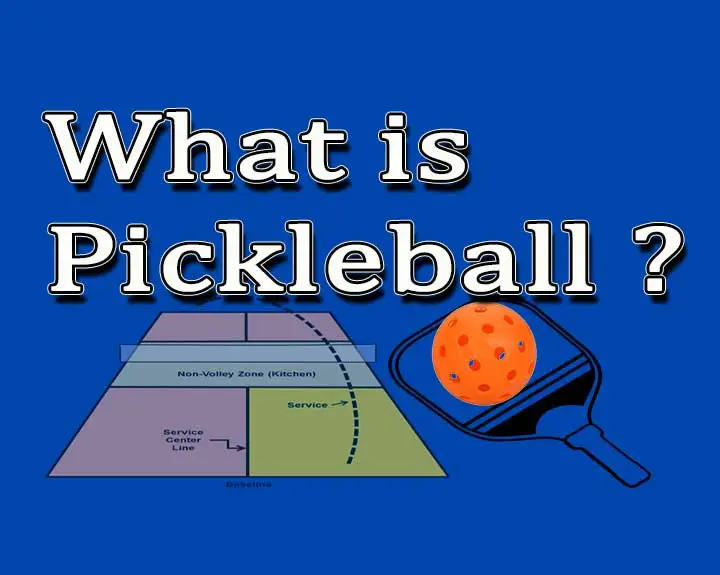
Pickleball is a paddle sport that borrows a bit from tennis, badminton, and table tennis. It’s played on a court roughly a third the size of a tennis court, using solid paddles and a perforated plastic ball that looks a lot like a wiffle ball. You can play singles, but it’s most commonly played as doubles, which is part of why it’s so social and so addictive.
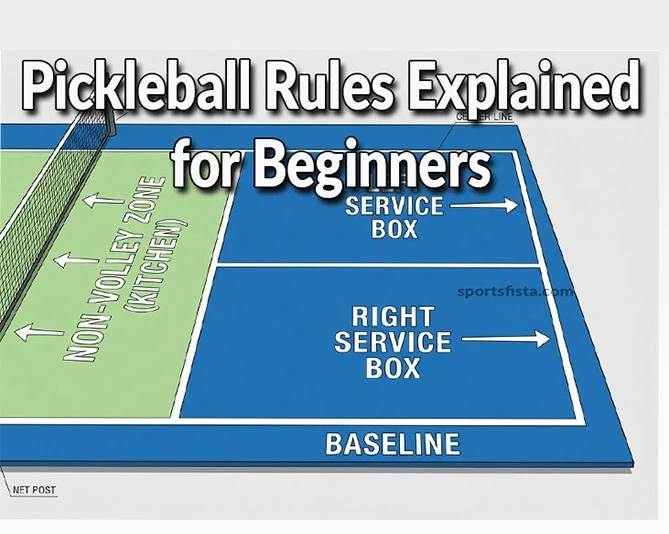
The court is divided by a net that sits lower than a tennis net, and each side has a no-volley zone right up against the net — more on that shortly, because it’s the single most misunderstood rule in the sport.
Basic Equipment You’ll Need
Before getting into rules, it helps to know what’s actually being used out there:
- A paddle (solid-faced, usually made from graphite, composite, or wood)
- A pickleball (a hard plastic ball with holes, different for indoor and outdoor play)
- Comfortable court shoes with good lateral support
- A court with lines marking the boundaries, the net, and the kitchen
Most public courts already have nets and lines painted, so realistically you just need a paddle and a ball to get started.
How Serving Works
Serving in pickleball has a few quirks that catch new players off guard.
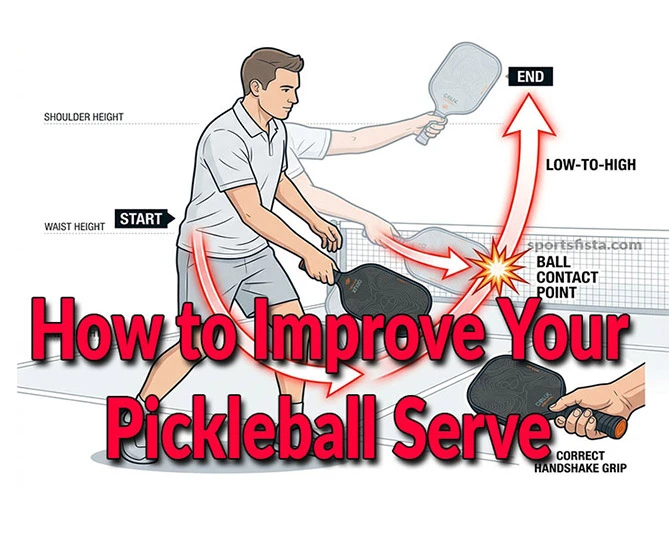
- The serve must be hit underhand, with the paddle contacting the ball below waist level.
- You have to serve diagonally, cross-court, into the opponent’s service box.
- The ball must clear the net and land in bounds — and it cannot land in the kitchen.
- Only one serve attempt is allowed per turn (no second serves like in tennis).
- The server calls out the score before serving.
One detail that surprises beginners: unlike tennis, you don’t serve until you win a point in traditional side-out scoring. Serving rotates based on who wins rallies, not a fixed rotation like a lot of new players expect.
The Double-Bounce Rule
This is the rule that makes pickleball feel different from tennis right away, and it’s one of the first things to lock into memory.
After the ball is served, the receiving team must let the ball bounce once before returning it. Then the serving team must also let that return bounce once before hitting it back. Only after these two bounces can either side start volleying the ball out of the air.
In short: serve, bounce, return, bounce, and then it’s open play. This rule exists to slow the game down early in the rally and prevent the serving team from rushing the net and smashing an easy volley right away.
Understanding the Kitchen (Non-Volley Zone)
The “kitchen” is the seven-foot zone on each side of the net, and it’s the rule that generates the most arguments at the beginner level.
You are not allowed to volley the ball (hit it out of the air without a bounce) while standing inside this zone. You can step into the kitchen to hit a ball that has already bounced, but you cannot volley from inside it, and your momentum can’t carry you into the kitchen right after a volley either.
The reasoning is simple: without this rule, taller players with longer reach could camp at the net and smash every ball, turning the game into a power contest instead of a strategic one. The kitchen rule is what keeps rallies going and rewards placement over raw power.
How Scoring Works
Traditional pickleball scoring confuses almost every beginner at first, mostly because of how the score is called out.
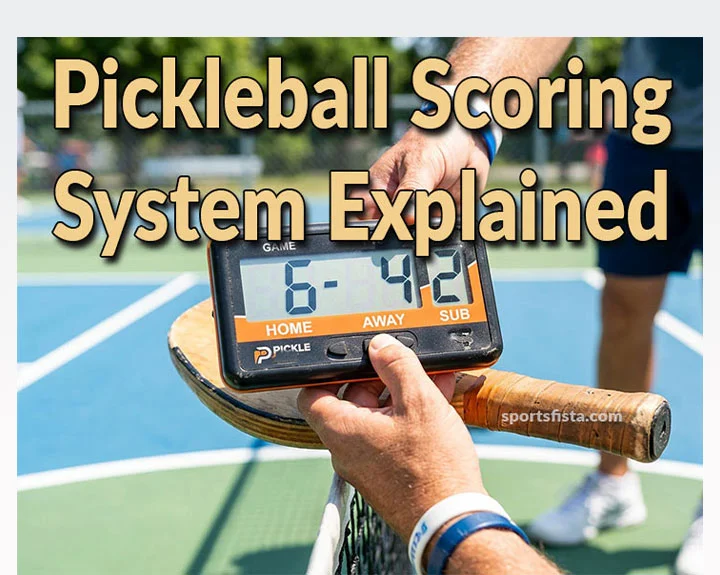
Games are typically played to 11 points, win by 2. Points can only be scored by the serving side — if you’re receiving and you win the rally, you don’t score a point, but you do earn the right to serve (this is called a side out).
During doubles play, the score is called as three numbers: your team’s score, the opposing team’s score, and whether you’re the first or second server on your team (1 or 2). So you might hear something like “4-2-1,” which tells both teams exactly where things stand and who’s serving.
It sounds complicated on paper, but after a game or two, it clicks.
Faults: What Ends a Rally
A fault ends the rally immediately and gives the point (or side out) to the other team. Common faults include:
- Hitting the ball into the net
- Hitting the ball out of bounds
- Volleying the ball while standing in the kitchen
- Letting the ball bounce twice on your side before returning it
- Serving into the net or outside the correct service box
- Touching the net with your body or paddle during play
Most faults are self-explanatory once you’ve seen them happen a few times, and referees usually aren’t involved at the recreational level — players call their own faults.
Common Beginner Mistakes to Avoid
A few habits tend to show up again and again with new players:
- Rushing the kitchen line and forgetting the double-bounce rule
- Volleying too early, before both bounces have happened
- Standing inside the kitchen out of habit, even when not hitting the ball
- Serving overhand out of muscle memory from tennis
- Losing track of the score because of the three-number calling system
None of these are hard to fix. Most players clean them up within their first few sessions just by playing more.
Final Thoughts
Pickleball’s rules look intimidating written out, but they make a lot more sense once you’re actually on the court. The double-bounce rule and the kitchen are really the two big concepts to focus on early — everything else falls into place with a bit of practice. Grab a paddle, find a local court, and don’t worry about looking like a beginner. Everyone was one once.
Frequently Asked Questions
What is the 2-bounce rule in pickleball?
The double-bounce rule requires the ball to bounce once on the return of serve and once on the serving team’s next shot before either side can volley the ball out of the air.
What is the kitchen in pickleball?
The kitchen, or non-volley zone, is the seven-foot area on each side of the net where players cannot hit the ball out of the air (volley), though they can step in to play a ball that has already bounced.
How do you keep score in pickleball?
Only the serving team can score points, games are usually played to 11 (win by 2), and in doubles the score is called as three numbers representing each team’s score and which server is currently up.
Can you serve overhand in pickleball?
No, serves must be underhand, with contact made below waist level, which is one of the biggest adjustments for players coming from tennis.
Is pickleball easier than tennis for beginners?
Most new players find pickleball easier to pick up than tennis because the court is smaller, the ball moves slower, and the underhand serve is simpler to control, though the strategy still takes time to master.